

Severe winds can damage a roof even when shingles are not visibly missing. Gusts may lift shingle edges, loosen flashing, break tree limbs onto the roof, or force rain into small openings. In Holley, NY, changing weather patterns associated with the Great Lakes can bring strong thunderstorms, fast-moving frontal systems, and winter wind events that place stress on roofing materials. ([weather.gov](https://www.weather.gov/buf/ROCclifo?utm_source=openai))
What parts of a roof are most vulnerable to wind?
The roof edges, corners, ridges, and areas around penetrations are usually exposed to the greatest wind pressure. Wind does not push evenly across a roof. It can create uplift as air moves over the roof surface, especially along the eaves, rakes, hips, and gable ends.
Commonly affected components include:
- Asphalt shingles and their adhesive seals
- Ridge caps and hip caps
- Drip edge and metal edging
- Step flashing around chimneys and walls
- Pipe boots and vent covers
- Fascia, soffits, and gutters
- Skylights and roof-mounted equipment
- Older roof sheathing or areas with deteriorated fasteners
A roof may remain watertight during ordinary rain but leak during wind-driven rain. That is why damage is sometimes discovered inside the attic or on a ceiling before it is obvious from the ground.
How does wind lift or remove shingles?
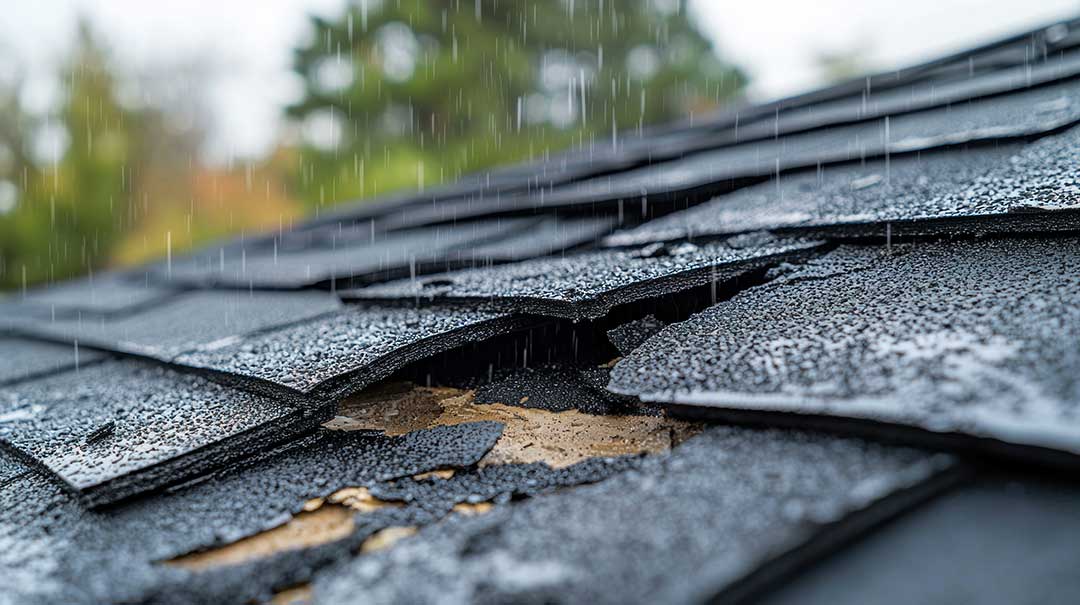
Wind can break the seal between adjacent shingles or pull at a shingle that has already become brittle. Once one edge lifts, the wind can get underneath it and increase the force on nearby shingles. A small area of loosened material may therefore become a larger opening during the same storm.
Signs of wind-related shingle damage include:
- Shingles that appear curled, raised, or out of alignment
- Bare areas where surface granules have been removed
- Shingle pieces in the yard or caught in gutters
- Exposed dark strips where an upper shingle has shifted
- Uneven lines along the roof edge or ridge
- Water stains that appear after a windy rain
Not every shingle found on the ground came from the roof. Wind can move roofing debris from another property, and older shingles may shed granules without losing their attachment. A pattern of displaced shingles on the roof is more meaningful than a single loose fragment.
Why can a roof leak even without missing shingles?
Wind can open small pathways at flashing joints, vent penetrations, valleys, and roof edges. Wind-driven rain may travel sideways or upward beneath overlapping materials. A roof that looks intact from the street can still have damaged underlayment, lifted flashing, or cracked sealant.
Attic insulation can hide early moisture. After a storm, check accessible attic areas for:
- Damp or compressed insulation
- Darkened wood around roof penetrations
- Drips or water trails
- Musty odors
- Daylight visible through the roof deck
- Wet electrical components or wiring
Do not enter an attic if the ceiling is sagging, water is near electrical equipment, or structural damage is suspected. Avoid walking on a wet or damaged roof because shingles become slippery and weakened areas may not support weight.
How do trees and branches contribute to roof damage?
Wind damage is not limited to direct pressure on the roofing system. Falling branches can puncture shingles, crack roof decking, damage gutters, and strike chimneys or vents. Even smaller limbs may scrape the roof repeatedly during a long period of gusty weather.
Trees near a house deserve extra attention before storm season. Dead branches, weak forks, and limbs that extend over the roof can create a greater risk than wind alone. Heavy snow or ice on branches may add another load, particularly during winter weather.
After a storm, look from the ground for broken limbs, roof punctures, displaced gutters, and hanging branches. Do not climb onto the roof to remove debris. A branch that appears stable may shift when touched, and hidden electrical hazards may be present.
Which roof conditions make wind damage more likely?
Wind exposes weaknesses that may have developed gradually. Roofs are more vulnerable when shingles are near the end of their service life, fasteners have loosened, flashing has corroded, or previous repairs were incomplete.
Other contributing conditions include:
- Missing or damaged starter shingles
- Poorly secured ridge caps
- Loose fascia or soffit panels
- Inadequate attic ventilation that contributes to material deterioration
- Repeated freeze-thaw cycles
- Moss or organic growth holding moisture against roofing materials
- Previous storm damage that was not fully repaired
The age of a roof alone does not determine whether it will withstand a storm. Installation quality, maintenance, roof design, exposure, and the condition of the underlying deck all matter.
What should residents do immediately after a severe wind event?
Start with safety and documentation rather than climbing onto the roof. From ground level, inspect the roofline, gutters, siding, chimney, and nearby trees. Photograph visible damage from several angles and note the approximate time of the storm.
Inside the house, check ceilings, upper walls, attic spaces, and areas around skylights or vents. If water is entering, place containers under active drips and move belongings away from the affected area. Do not puncture a bulging ceiling; the cavity may contain trapped water.
Temporary protection may be necessary when an opening is exposed, but tarps, ladders, and roof access can be hazardous. Repairs involving unstable roof surfaces, electrical hazards, structural damage, or large areas of missing material should be handled by someone qualified to work safely under those conditions.
Does building code address wind resistance?
New York’s residential code includes wind-resistance requirements for roofing materials and assemblies. Asphalt shingles must meet specified testing and classification requirements, while other roof systems also have standards for resisting wind uplift. ([dos.ny.gov](https://dos.ny.gov/2024-residential-code-new-york-state-2024-rcnys?utm_source=openai))
Code compliance does not mean a roof cannot be damaged by an unusually severe storm. It means the roof is designed and installed according to required minimum standards for its location and construction. Older homes may have been built under different requirements, and later repairs may not match the original roof assembly.
For that reason, replacing only visibly missing shingles may not address damage to the underlayment, decking, flashing, or edge components. The entire affected area should be considered.
Can homeowners prevent wind damage?
No maintenance plan can eliminate storm risk, but routine attention can reduce avoidable weaknesses. Before periods of severe weather, residents can:
- Keep gutters and downspouts clear so water does not back up beneath roof edges
- Look for visibly loose, cracked, or missing shingles from the ground
- Keep tree limbs trimmed away from the roof where practical
- Check that attic insulation and ventilation are not blocking intended airflow
- Secure lightweight outdoor items that could become airborne
- Review whether previous repairs remain intact
- Keep storm photographs and roof records for reference
After a severe wind event, a careful ground-level inspection can identify problems early. Prompt attention is especially useful before the next period of rain, snow, or freeze-thaw weather, when a small opening can allow moisture to spread into insulation, framing, and interior finishes.
